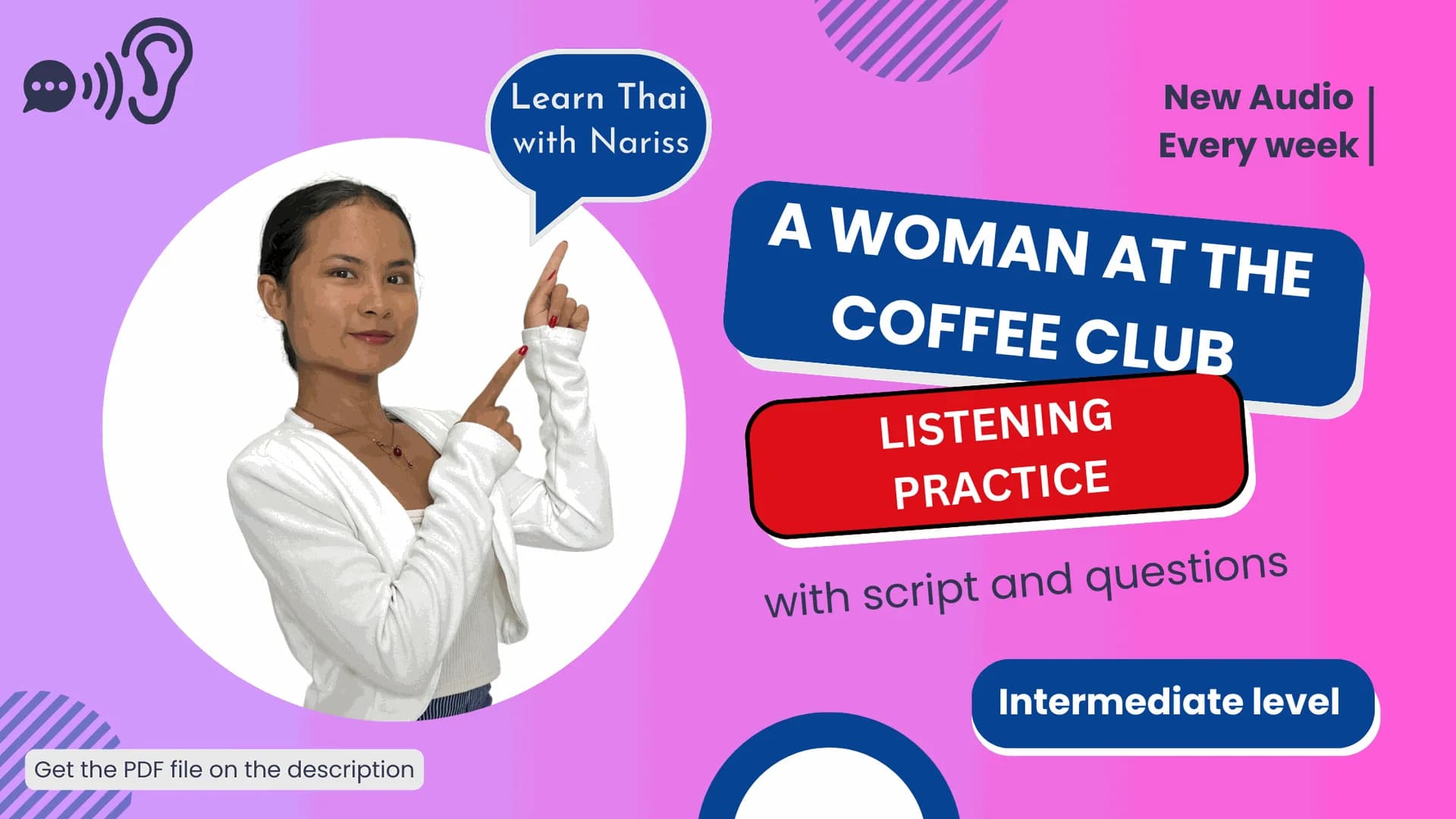
This story is about one of those random coffee shop encounters that stays with you. A woman sitting alone, reading her book, gets pulled into a conversation with a stranger who has spent thirty years traveling the world solo. It is the kind of exchange that makes you rethink your own plans.
The passage uses everyday Thai at an intermediate level. You will practice reported speech, learn how to talk about travel and life experiences, and pick up vocabulary that comes up constantly in real conversations. Watch the video first without reading, then scroll down and check how much you understood.
Video
Romanized Script
Mâi-gìi-deuan-gàwn, chán nâng thîi ráan gaa-fae khon-diao, àan nǎng-sěue thîi chán châwp.
Mii phûu-yǐng aa-yúu mâak-gwàa chán bprà-maan yîi-sìb bpii, nâng thîi dtó khâang chán. Ther thǎam chán wâa gam-lang àan arai?, aa-yú thâo-rài?, yùu thîi-nîi gàb khrai?
Rao rêrm phûud láe tham-khwaam-rúu-jàk gan láe chán dâi rúu wâa ther maa jàak Australia. Ther thîaw ràwb-lôk khon-diao bpen way-laa sǎam-sìb-bpii láew.
Ther bpai lǎai bprà-thêd, ther lâo chán gìao-gàb bprà-sòb-gaan nai Africa láe Asia.
Fang duu nâa-sà-nùk mâak, chán khíd-wâa chán yàak long bpai thîi-nân duu sák khráng nai chii-wít.
English Translation
“A few months ago, I was sitting alone at a coffee shop, reading a book I liked.”
“There was a woman about twenty years older than me sitting at the table next to mine. She asked me what I was reading, how old I was, and who I was here with.”
“We started talking and getting to know each other, and I found out she was from Australia. She had been traveling the world alone for thirty years.”
“She had been to many countries. She told me about her experiences in Africa and Asia.”
“It sounded really fun. I thought I would like to go there at least once in my life.”
Vocabulary Focus
| Thai | Pronunciation | English |
|---|---|---|
| น่าสนุก | nâa-sà-nùk | interesting, fun |
| ประสบการณ์ | bpràsòb-gaan | experience |
| ประเทศ | bprà-thêd | country |
| อายุ | aa-yú | age |
| เที่ยว | thîaw | to travel |
| คนเดียว | khon-diao | alone |
| โต๊ะ | dtó | table |
| หนังสือ | nǎng-sěue | book |
| รอบโลก | ràwb-lôk | around the world |
| ชีวิต | chii-wít | life |
น่าสนุก
nâa-sà-nùk
interesting, fun
ประสบการณ์
bpràsòb-gaan
experience
ประเทศ
bprà-thêd
country
อายุ
aa-yú
age
เที่ยว
thîaw
to travel
คนเดียว
khon-diao
alone
โต๊ะ
dtó
table
หนังสือ
nǎng-sěue
book
รอบโลก
ràwb-lôk
around the world
ชีวิต
chii-wít
life
Grammar Focus: Reported Speech with ว่า (wâa)
In Thai, ว่า (wâa) works like “that” in English when you report what someone said, thought, or asked. It connects the main clause with the reported statement. You will hear it constantly in everyday Thai, so getting comfortable with this pattern is worth your time.
เธอบอกว่าเธอชอบเที่ยวรอบโลก
Ther bàwk wâa ther châwp thîaw ràwb lôk
She said that she enjoys traveling around the world.
เขาถามฉันว่าอายุเท่าไหร่
Khǎo thǎam chán wâa aa-yú thâo-rài
He asked me how old I am.
ฉันคิดว่าเธอเป็นคนใจดีมาก
Chán khít wâa ther bpen khon jai-dii mâak
I think that she is a very kind person.
แม่เล่าว่าฝนตกหนักมากเมื่อวานนี้
Mâe lâo wâa fǒn dtòk nàk mâak mûuea waan níi
Mom said that it rained heavily yesterday.
พ่อบอกว่าเราจะไปเที่ยวพรุ่งนี้
Phâw bàwk wâa rao jà bpai thîaw phrûng-níi
Dad said that we will go on a trip tomorrow.
In each example, ว่า (wâa) introduces the reported part of the sentence. It makes clear that the speaker is relaying someone else's words, thoughts, or questions. Once you start listening for it, you will notice it everywhere.
Practice Tips
- Watch the video once without reading anything. Focus on catching words you already know.
- On a second pass, follow along with the romanized script. Pay attention to the rhythm and where pauses fall.
- Try retelling the story in your own words using ว่า (wâa) to report what the woman said.
- Cover the English translation and see how much you can understand from the romanization alone.
Want structured listening practice with full video lessons? Nariss's video courses cover every level from beginner to advanced, with hours of real Thai audio. Or continue practicing with the next listening exercise on overcoming fear.