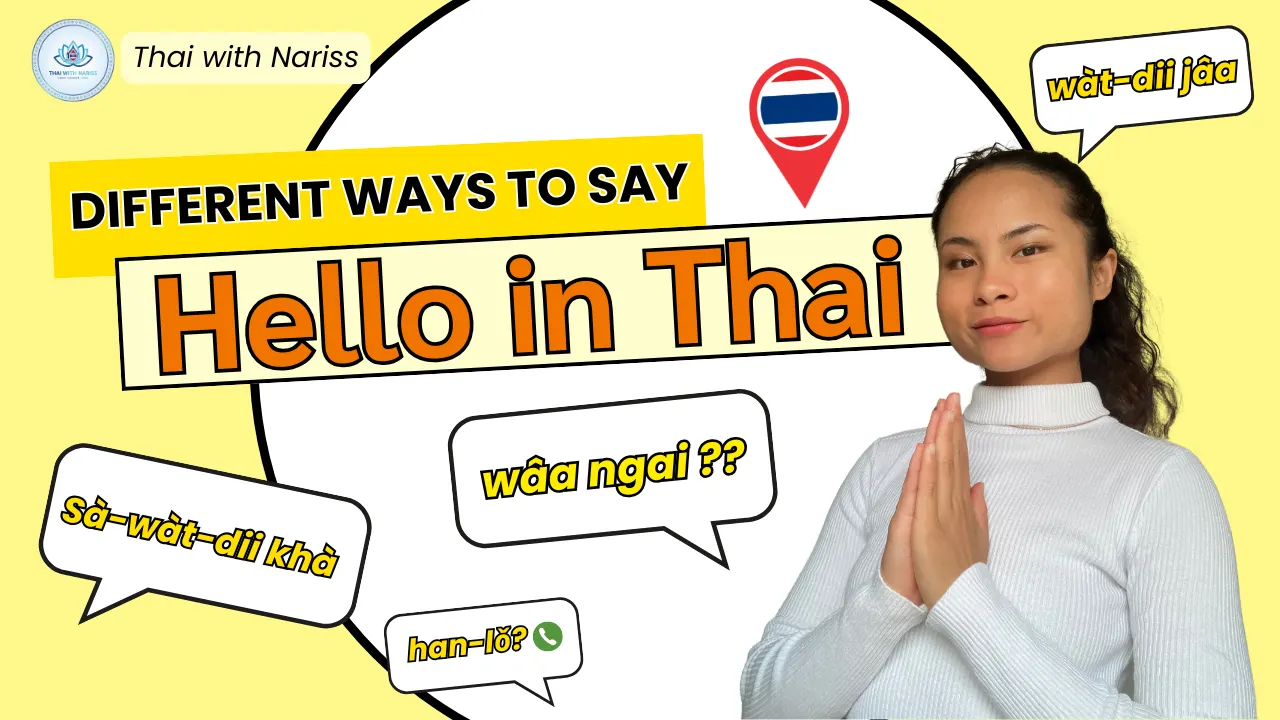
In Thai, the universal greeting is sà-wàt-dii (สวัสดี), commonly written sawasdee. Men end it with khráp (ครับ) and women with khà (ค่ะ), so a man says sà-wàt-dii khráp and a woman sà-wàt-dii khà. The same word works morning, afternoon, and evening, which makes it the first phrase most learners master.
That single paragraph already puts you ahead of most visitors. But Thai greetings carry more nuance than one word, and using them well is one of the fastest ways to get a warm reaction from Thai people. If you are learning Thai as a beginner, this is lesson one. Let's go through it.
Sà-wàt-dii: The Universal Thai Hello
Sà-wàt-dii (สวัสดี), commonly written sawasdee, is pronounced sà-wàt-dii, with a soft "t" sound closing the second syllable. The polite particle at the end depends on the speaker's gender, not the listener's. A man always says khráp. A woman always says khà.
| Thai | Pronunciation | English |
|---|---|---|
| สวัสดีครับ | sà-wàt-dii khráp | Hello (male speaker) |
| สวัสดีค่ะ | sà-wàt-dii khà | Hello (female speaker) |
| สวัสดี | sà-wàt-dii | Hello (plain, between close friends) |
สวัสดีครับ
sà-wàt-dii khráp
Hello (male speaker)
สวัสดีค่ะ
sà-wàt-dii khà
Hello (female speaker)
สวัสดี
sà-wàt-dii
Hello (plain, between close friends)
Thais often pair the greeting with a wâi (ไหว้): palms pressed together at chest level with a slight bow of the head. You are not expected to wâi everyone. Use it with elders and anyone you want to show respect, and when a shop assistant wâis you, you can simply smile back or wâi back to receive the greeting.
Formal vs Casual Greetings
With friends, Thais shorten sà-wàt-dii or drop it entirely. You will hear wàt-dii everywhere on the street, and a casual ngai between people who know each other well. Save these for friends. With your in-laws or an immigration officer, stay with the full sà-wàt-dii khráp or sà-wàt-dii khà.
| Thai | Pronunciation | English |
|---|---|---|
| หวัดดี | wàt-dii | Hi (casual, friends and peers) |
| หวัดดีครับ / หวัดดีค่ะ | wàt-dii khráp / wàt-dii khà | Hi (casual but still polite) |
| ไง | ngai | Hey (very casual, close friends only) |
| เป็นไง / ว่าไง | bpen ngai / wâa ngai? | What's up? (casual) |
หวัดดี
wàt-dii
Hi (casual, friends and peers)
หวัดดีครับ / หวัดดีค่ะ
wàt-dii khráp / wàt-dii khà
Hi (casual but still polite)
ไง
ngai
Hey (very casual, close friends only)
เป็นไง / ว่าไง
bpen ngai / wâa ngai?
What's up? (casual)
Good Morning, Afternoon, Evening in Thai
Here is the part textbooks overcomplicate: Thais use sà-wàt-dii at any hour. Time-specific greetings exist, but you will mostly hear them from TV hosts and in formal announcements. Learn to recognize them, and don't worry about using them in daily life. For when each one does get used, including fan dee for sweet dreams, see my guide to good morning and good night in Thai.
| Thai | Pronunciation | English |
|---|---|---|
| อรุณสวัสดิ์ | à-run-sà-wàt | Good morning (formal, mostly TV and radio) |
| สวัสดีตอนเช้า | sà-wàt-dii dtawn-cháo | Hello in the morning |
| สวัสดีตอนบ่าย | sà-wàt-dii dtawn-bàai | Hello in the afternoon |
| สวัสดีตอนเย็น | sà-wàt-dii dtawn-yen | Hello in the evening |
| ราตรีสวัสดิ์ | raa-dtrii-sà-wàt | Good night (formal, before sleeping) |
| ฝันดีนะ | fǎn dii ná | Have a good dream / sweet dreams |
อรุณสวัสดิ์
à-run-sà-wàt
Good morning (formal, mostly TV and radio)
สวัสดีตอนเช้า
sà-wàt-dii dtawn-cháo
Hello in the morning
สวัสดีตอนบ่าย
sà-wàt-dii dtawn-bàai
Hello in the afternoon
สวัสดีตอนเย็น
sà-wàt-dii dtawn-yen
Hello in the evening
ราตรีสวัสดิ์
raa-dtrii-sà-wàt
Good night (formal, before sleeping)
ฝันดีนะ
fǎn dii ná
Have a good dream / sweet dreams
How to Respond to a Greeting
The standard reply is to mirror the greeting with your own particle. Right after sà-wàt-dii, Thais often ask sà-baai-dii mái? ("are you well?"). The expected answer is short and positive.
| Thai | Pronunciation | English |
|---|---|---|
| สบายดีไหม | sà-baai-dii mái? | How are you? |
| สบายดี | sà-baai-dii | I'm fine. |
| ยินดีที่ได้รู้จัก | yin-dii thîi dâai rúu-jàk | Nice to meet you. |
สบายดีไหม
sà-baai-dii mái?
How are you?
สบายดี
sà-baai-dii
I'm fine.
ยินดีที่ได้รู้จัก
yin-dii thîi dâai rúu-jàk
Nice to meet you.
Common Mistakes
The error I hear most from new students is using the wrong particle. A man greeting a woman still says khráp, because the particle follows the speaker. Saying khà as a man will get you a giggle, not offense, but it marks you as a beginner.
Second: dropping the "t" sound. Many learners say "sa-wa-dee" because that is how tourist guides spell it. The middle syllable ends in a soft "t": sà-wàt-dii. Thais will understand you either way, but the correct version sounds noticeably better.
And don't skip the greeting altogether. Walking up to a street vendor and ordering without a sà-wàt-dii feels abrupt in Thailand. Greet first, then ask. It changes the whole interaction, especially outside Bangkok.
Practice
How would you greet each person below? Say it out loud, then check the answers. Answers are given for a female speaker; swap khà for khráp if you are a man.
- Your hotel receptionist in the morning.
- A close Thai friend you bump into at the market.
- Your friend's grandmother, visiting her home.
| Thai | Pronunciation | English |
|---|---|---|
| สวัสดีค่ะ | sà-wàt-dii khà | 1. Hello (polite, works at any hour) |
| หวัดดี | wàt-dii | 2. Hi (casual, between friends) |
| สวัสดีค่ะ | sà-wàt-dii khà | 3. Hello, with a wâi to show respect |
สวัสดีค่ะ
sà-wàt-dii khà
1. Hello (polite, works at any hour)
หวัดดี
wàt-dii
2. Hi (casual, between friends)
สวัสดีค่ะ
sà-wàt-dii khà
3. Hello, with a wâi to show respect
If you are heading to Thailand soon, my Thai for Travelers course builds on these greetings with the food, transport, and bargaining phrases you will actually use.
Once your hello sounds natural, keep going with my full guide to basic Thai phrases, or work on your pronunciation directly with me in private Thai lessons.