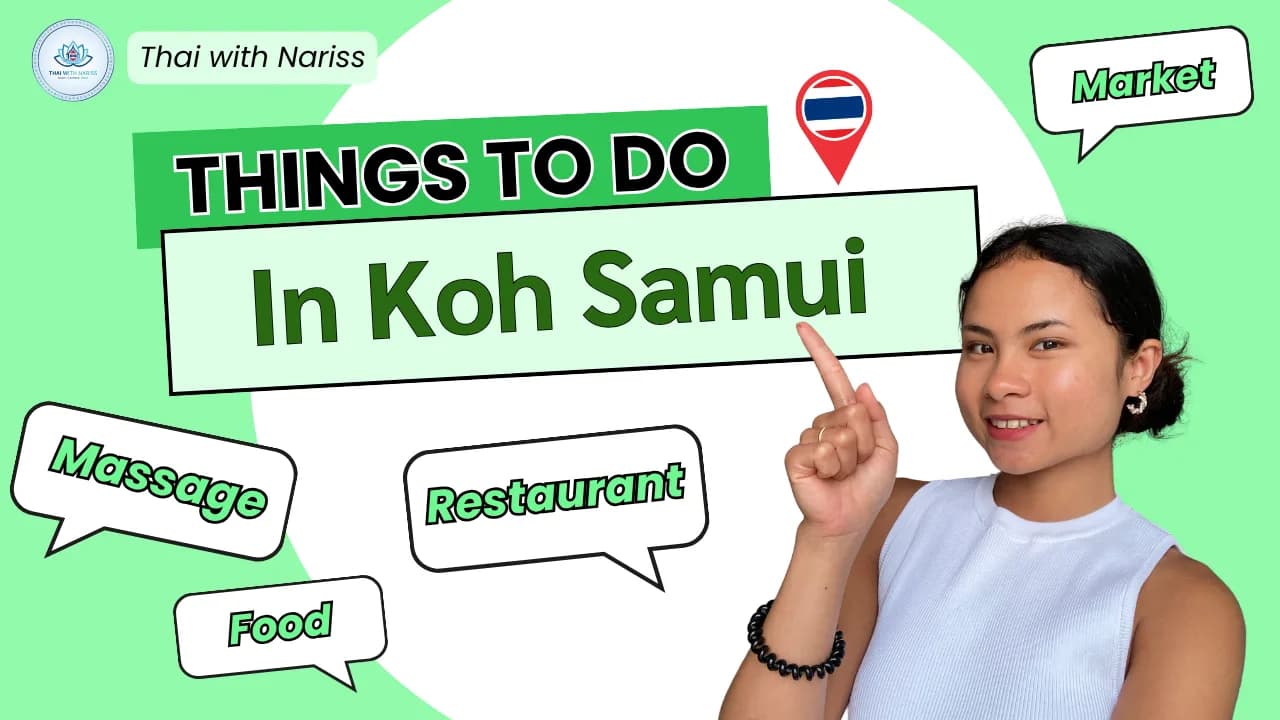
The best things to do in Koh Samui fall into two halves: the coast and the green middle of the island. On the coast you have beaches like Chaweng, Lamai, Maenam, and Bophut. Inland and offshore there are temples such as the Big Buddha, the Na Muang waterfalls, and boat trips out to Ang Thong Marine Park.
I have lived on Samui most of my life, so this is the guide I give friends who visit, not the one the tour desks hand you. I will tell you which beach I actually prefer and which trips earn the early start.
The Beaches, Honestly
Samui has one main road that loops the island, and most of the beaches sit just off it. Chaweng is the long, busy one on the east coast, with the most hotels, bars, and beach clubs. If you want nightlife and a wide stretch of sand, go there.
Lamai, just south, is Chaweng's calmer cousin: plenty of restaurants still, but softer crowds and, in my opinion, a nicer swim. Maenam, up on the north coast, is where I go when I want quiet. The sand is a touch coarser, the sea stays flat, and the whole stretch keeps its local feel. Bophut has the old teak shophouses of Fisherman's Village right behind it, so you get a swim and a walkable village in one stop. Silver Beach, the small cove tucked between Chaweng and Lamai, is my pick for snorkeling straight off the sand. It is tiny, so it fills up by mid-morning.
Temples Worth Your Morning
Two temples are worth seeing, and both are better early, before the heat and the tour buses arrive. Wat Phra Yai, the Big Buddha, is a golden seated figure about twelve meters tall, sitting on a small island joined to the north coast by a causeway. You climb the steps for the view back over the water. Wat Plai Laem is a few minutes away, a brighter and more modern temple built around an eighteen-armed statue of Guan Im, the goddess of mercy, who stands over a lake full of fish you can feed.
Both are free to enter, and both keep a donation box near the entrance; leaving a small note is the normal thing to do. Cover your shoulders and your knees, men and women alike. If you turn up in beach clothes the temple will usually lend you a sarong, but it is kinder to arrive dressed. Take your shoes off before entering any building, and when you sit, keep your feet from pointing at a Buddha image.
Ang Thong Marine Park
Ang Thong is the reason a lot of people come to this corner of the Gulf. It is a protected park of around forty limestone islands west of Samui, and you reach it on a day boat, either a fast speedboat or a slower big boat. The stop everyone photographs is the hidden saltwater lagoon on Koh Mae Ko, a still green pool ringed by cliffs that you reach by climbing a steep run of steps. There is a higher viewpoint as well, and the climb up is short but sweaty in the heat.
Most trips give you a couple of hours of kayaking around the rock formations, some snorkeling, and lunch on one of the islands. I will be honest: the boat ride gets rough when the sea is up, so if you are prone to seasickness, take something before you leave the pier. The park also closes for a stretch of the monsoon low season each year, so check that it is open before you book anything.
Waterfalls and the Green Middle of the Island
The center of Samui is jungle and coconut plantation, and that is where the waterfalls hide. Na Muang is the main one, and there are two of them. Na Muang 1, the lower fall, is an easy walk from the road and drops into a pool you can swim in. Na Muang 2 is much taller, around eighty meters, and takes a short jungle hike to reach. Go after rain if you possibly can. In the dry months from roughly February to April the flow thins to a trickle, and the falls run fullest at the tail end of the rainy season, around October and November.
While you are inland, the mountain viewpoints are worth the detour, though some of the tracks up to them are steep and rough, so a car or a steady hand on a scooter helps. And skip the elephant rides and monkey shows that a few places advertise near the falls; plenty of visitors come away wishing they had not.
Fisherman's Village and the Night Markets
Fisherman's Village in Bophut is a strip of old Chinese-Thai shophouses turned into restaurants and little shops, sitting right on the water. On Friday evenings the main lane closes to traffic and turns into the Walking Street market, lantern-lit and busy. It is touristy, I will admit, but the food is good. Look for pla pao (ปลาเผา), a whole fish packed in salt and grilled over coals, satay skewers cooked in front of you, fresh seafood sold by weight, and mango with sticky rice to finish.
Bring cash in small notes, because no stall takes cards. Prices on food are usually fixed and fair. On clothes and souvenirs you can bargain a little, but do it gently and with a smile; a friendly wai and a joke get you a better price than pushing hard over twenty baht ever will. Other night markets move around the towns through the week, so ask whoever you are staying with which one is on the evening you are free.
Eat Where the Locals Eat
The best food on Samui is rarely inside the beach resorts. Look for it in the fresh markets and the open-front shops where Thai families actually eat. Every town has a market, busiest in the early morning and again in the late afternoon, where you buy fruit, grilled pork skewers, som tam pounded to order, and bags of curry to go.
This is the south of Thailand, so the local cooking runs hotter and more pungent than the pad thai you see on the tourist menus. A few dishes to look for: gaeng tai pla (แกงไตปลา), a deep, salty fish curry that locals adore and most visitors find fierce; khua kling (คั่วกลิ้ง), a dry minced-meat curry loaded with fresh herbs and chili; and khao mok gai (ข้าวหมกไก่), the Thai-Muslim chicken biryani that turns up all over the south. If the heat is getting to you, the southern-style fried chicken and khanom jeen (ขนมจีน), thin rice noodles you ladle curry over yourself, are gentler places to begin. Food courts inside the big supermarkets are cheap and clean, a soft landing if street stalls make you nervous.
Getting Around the Island
There are two easy ways to move around Samui. The first is the songthaew, the red pickup trucks with two benches in the back that run set loops along the ring road. You flag one down, tell the driver where you are headed, and pay when you climb out. Agree the price first, because the fare for a visitor and the fare for me are not always the same. They thin out after dark, which is when you fall back on the Grab app or a metered taxi.
The second is a scooter, which is how most of us here get around day to day. It gives you the freedom to reach the quiet beaches and the mountain viewpoints on your own clock. It also carries real risk on Samui's roads, so if you have never ridden one, this island is not the place to learn. I wrote a full guide to renting a motorbike on Koh Samui that covers the paperwork, the police checkpoints, and how to ride safely.
Rainy Day or Restless: Muay Thai, Markets, Massage
Samui gets its heaviest rain toward the end of the year, and a wet afternoon does not have to be a lost one. When the beach is out, here is what people on the island actually do.
Watch Muay Thai. Samui has stadium nights where you can see real fights, and even if you have never followed the sport, the ceremony beforehand and the live music through each round are worth the ticket on their own. I wrote more about the culture behind Muay Thai if you want the background before you go. Get a Thai massage; an hour of nuat Thai (นวดไทย) costs a small fraction of what it does back home, and the shophouse massage places are on nearly every corner. Take a cooking class and come away able to make a curry from scratch. Or do what half the island does when it truly pours: find a cafe, order a coffee, and wait the rain out.
Say a Little Thai While You Are Here
You can get around Samui in English, but a few words of Thai change how the island treats you. Say hello and thank you to the songthaew (สองแถว) driver or the woman at the fruit stall and you stop being just another face passing through. It is a small effort, and people here notice it and give it back.
Start with these.
| Thai | Pronunciation | English |
|---|---|---|
| สวัสดีครับ / สวัสดีค่ะ | sà-wàt-dii khráp / khà | Hello (male / female speaker) |
| ขอบคุณครับ / ขอบคุณค่ะ | khàwp-khun khráp / khà | Thank you (male / female speaker) |
| อร่อย | à-ròi | Delicious |
| เท่าไหร่ | thâo-rài | How much? |
สวัสดีครับ / สวัสดีค่ะ
sà-wàt-dii khráp / khà
Hello (male / female speaker)
ขอบคุณครับ / ขอบคุณค่ะ
khàwp-khun khráp / khà
Thank you (male / female speaker)
อร่อย
à-ròi
Delicious
เท่าไหร่
thâo-rài
How much?
The polite word at the end marks your own gender: a man says khráp, a woman says khà. Say à-ròi to the cook after a good plate of food and watch the smile you get in return. If you want more than a handful of words, I keep a page of basic Thai phrases with the script and pronunciation for exactly these everyday moments.
Samui gives the most back to the people who slow down and meet it on its own terms, and language is part of that. If you are staying a while, or you find yourself coming back year after year, learning some Thai turns a holiday island into a place you can talk your way around. I teach in-person Thai lessons here on Koh Samui, from a single travel-survival session to regular weekly classes, and we can start with the exact phrases you will use that same week. If your trip is short, my Thai for Travelers course covers the taxi and market Thai you need before you even land.